

The Story Behind the Pear Farm Scene in Queen of Tears. Why Do Korean Farmers Wrap Every Single Pear in Paper?
If you watched Queen of Tears Episode 10, you may have noticed something unusual in the pear farm scene: the fruit was dressed in little paper bags. [Add 1-2 sentences describing the scene: who is there, what’s happening, how the bags appear on screen.]
It looks adorable, but it’s also a serious piece of Korean farming know-how. Let’s unwrap it.
Why wrap pears in paper?
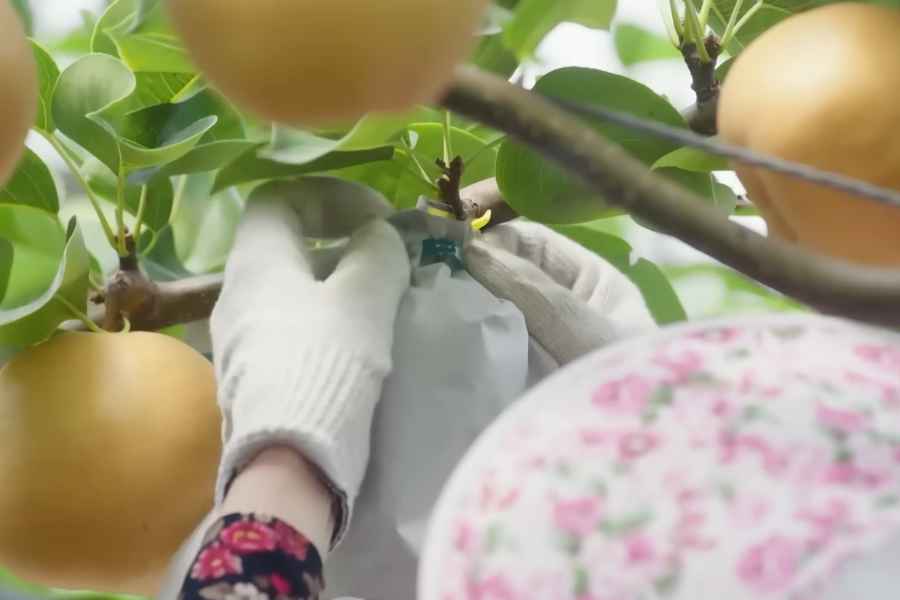
Korean farmers put a bag on each pear while it is still growing on the tree. There are three main reasons.
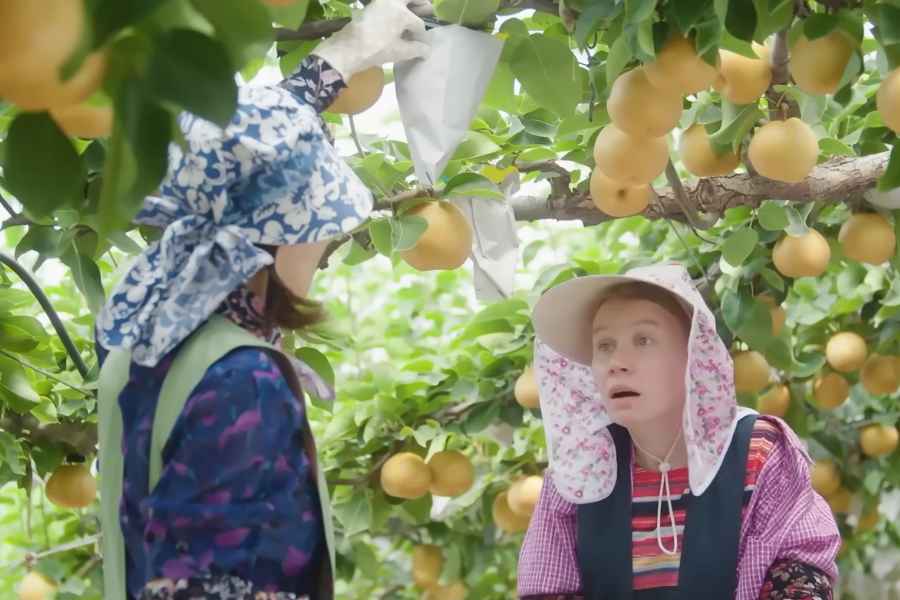
1. Protection from pests and disease.
The bag works as a physical shield against insects and fungal diseases, so farmers can reduce the amount of pesticide that reaches the fruit.
2. A cleaner, more beautiful skin.
Pear skin is thin and bruises easily. Any scratch can turn dark brown. Without a bag, the fruit’s color can end up dull and uneven. Wrapping it keeps the skin smooth and evenly colored.
3. Protection from weather and animals.
Wind, rain, strong sun, and birds can all damage the fruit. The bag softens all of that.
Farmers typically use black or yellow bags for pears, and sometimes a double layer, much like for apples.
Where to Watch Queen of Tears
Is there a downside?
Yes. Because the fruit gets less direct sunlight, it can be slightly less sweet. Korean farmers accept that trade-off in exchange for healthier, better-looking fruit.
Why does appearance matter so much?
In Korea, fruit is a classic gift. Premium pears are given at Chuseok and the Lunar New Year, often in beautiful boxes. In that culture, looks directly affect value, so a flawless pear is worth much more than a blemished one.
Think about it: each pear on that gift box was individually wrapped by hand, while still on the tree.
Do farmers in other countries do this too?
It depends on where you are.
- Korea, Japan, China, and Taiwan: Very common. In Japan, the practice is called fukuro-kake (袋掛け) and is used for pears, apples, grapes, and peaches.
- The US, Europe, and Australia: Most commercial orchards don’t do it. Wrapping hundreds of fruits per tree by hand costs too much in labor, so growers rely on sprays, pheromone-based pest control, and netting instead.
- Small farms and home gardens: Some gardeners in places with heavy pest pressure, such as parts of the southeastern US, bag Asian pears or apples to protect them.
So the contrast is this: many Western orchards protect fruit with machines and sprays, while many East Asian farmers protect it with hands and paper.
Next time you watch
Now when you see those paper-covered pears in Queen of Tears, you’ll know it isn’t just a pretty set. It reflects patience, care, and a culture where fruit is a gift worth presenting perfectly.
Have you ever tasted a Korean pear?





 This product uses the TMDB API but is not endorsed or certified by